
The Choir
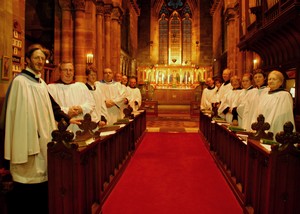
Thereare approximately twelve singers in the choir. Whilst female voicesare used for the soprano line, male countertenors supply the altopart. Thus when required, a three part choir of male voices can beemployed.
Newmembers are always welcome. There is no formal audition, andprospective singers are asked to attend choir practice at 7.30 onThursday evenings (entry via the vestry door in St. Chad’s Place).A separate rehearsal for Saturday Evensong is held before the serviceat 3.30 p.m.
SungMatins
PrayerBook Matins is sung in the choir at 10 a.m. each Sunday. Choir andcongregation sit together in the choir stalls, and the service issung to chants in four parts. Saint Chad’s is one of few churchesto maintain the singing of Matins.
SungEucharist
TheEucharist, in traditional language, is sung by the full choir at 11a.m. on Sundays and at 7.30 p.m. on Holydays. The propers (Introit, Gradual, Alleluia, Offertory and Communion) are sung to plainsong.The ordinary of the Mass (Kyrie, Gloria, Creed, Sanctus and AgnusDei) are sung using one of six settings, all of which are chosen toallow full participation by the congregation. There are four hymnsand a psalm, and the choir sings a motet during communion.
ChoralEvensong
PrayerBook Evensong is now sung every Saturday at 4.30 p.m., (except theSaturdays after Easter Day and Christmas Day). The service is‘cathedral-style’, starting with ‘O Lord, open thou our lips’and ending with the five prayers after the anthem. The responses andthe canticles are sung to a wide range of settings from the sixteenthcentury to the latter part of the twentieth century. Some Evensongsare sung using men’s voices only, and from time to time the FirstPrayer Book of Edward V1 (1549) is used for these services.
Pleasesee the MusicList fordetails.